Introduction
Brass contact pins are the invisible workhorses of modern electrical systems, found in automotive connectors, medical diagnostic equipment, circuit boards, and farm machinery. These small components must maintain reliable conductive connections through thousands of cycles, extreme temperatures, and harsh environments.
For procurement managers and design engineers, choosing the right US-based manufacturer isn't just about unit price. Supply chain stability, quality control, and regulatory compliance all ride on the decision.
The US market offers dozens of manufacturers, but they vary dramatically in technology, precision capabilities, and material quality. The difference matters:
- A machined pin might cost less per unit but generate 15% scrap and fail compliance audits
- A cold-formed pin can deliver zero waste with defect rates measured in parts per hundred million
The wrong choice means rework, production delays, and compliance failures.
This guide profiles the top 10 US brass contact pin manufacturers, examining what truly sets them apart and what buyers should evaluate before placing an order.
Key Takeaways
- Brass contact pins serve automotive, medical, electronics, and industrial sectors—material and method affect conductivity, durability, and compliance
- US manufacturers range from high-volume cold-formed specialists to precision-machined and custom-rolled component suppliers
- Evaluate manufacturing technology, defect rates, certifications, and scaling capability before committing to a supplier
- Electropin leads with proprietary automatic die rolling: 1 defect per 600,000,000 pins, zero scrap, first batch in two weeks
- Production method drives cost, accuracy, and waste—choose by volume and tolerance needs, not just catalog price
What Are Brass Contact Pins and Why Do They Matter?
Brass contact pins are small, tightly toleranced electrical components that create reliable conductive connections in connectors, circuit boards, molded plastic housings, and industrial equipment. Unlike steel (which rusts) or aluminum (which conducts poorly by comparison), brass offers an optimal balance of electrical conductivity, machinability, and corrosion resistance. That combination makes it the preferred material for applications requiring long service life and consistent performance.
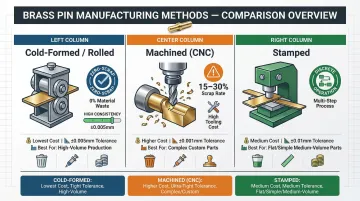
Three manufacturing methods dominate brass pin production:
- Cold-formed/rolled pins — shaped through pressure and die rolling without cutting, producing zero scrap
- Machined pins — cut from solid bar stock using CNC tools, generating scrap and tool wear
- Stamped pins — formed through impact dies in discrete operations
The method chosen directly affects tolerances, cost per unit, material waste, and consistency at scale. For high-volume OEM buyers, that process decision often matters as much as the pin specification itself.
Growing pressure around REACH/RoHS compliance, supply chain resilience, and quality traceability has pushed more buyers toward US-based sources. The manufacturers listed here are among the strongest domestic options across those criteria.
Top 10 Brass Contact Pins Manufacturers in the US
These manufacturers were selected based on manufacturing capability, industry reputation, product quality, lead time performance, and breadth of applications served.
Electropin (Autoswage Products, Inc.)
Founded in 1943 in Connecticut as Autoswage Products, Inc., Electropin relocated to North Carolina and rebranded in 2019. Now led by Keith Brenton with 35+ years of experience, the company manufactures fully custom brass contact pins using proprietary automatic die rolling technology.
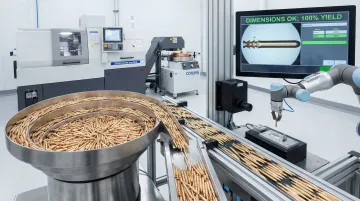
Electropin serves automotive, medical, farm equipment, computer, and circuit board industries. Automatic die rolling produces up to 5 custom pins per second with a defect rate of 1 in 600,000,000 — no cutting means no scrap, no blunted parts, and no REACH/RoHS concerns. First batch delivery can be as fast as two weeks when raw materials are available.
| Specification | Details |
|---|---|
| Manufacturing Technology | Automatic die rolling (no cutting, no heat—scrap-free production) |
| Key Industries | Automotive, medical connectors, farm equipment, computers, circuit boards |
| Notable Advantage | Lead-free brass pins; defect rate of 1 in 600,000,000; scalable from prototype to mass production |
Mill-Max Mfg. Corp.
Based in Oyster Bay, New York, Mill-Max has built a strong domestic reputation for precision-machined contacts and pins through decades of catalog depth and distribution reach. The company operates across US and European distribution networks, offering short lead times for standard catalog items and consistent dimensional accuracy.
- Broad catalog of standard pins with custom options available
- Established presence in electronics, industrial, and semiconductor test markets
- Reliable stock availability with responsive technical support
| Specification | Details |
|---|---|
| Manufacturing Technology | Precision CNC machining |
| Key Industries | Electronics, industrial, semiconductor test |
| Notable Advantage | Extensive standard catalog plus custom capabilities; established distribution network |
Keystone Electronics
Headquartered in Astoria, New York, Keystone Electronics manufactures a wide range of electronic hardware including brass pins, terminals, and contacts. The company supports both prototype and production quantities across electronics and PCB assembly markets.
- Wide standard catalog with flexible order quantities
- Established supplier for PCB assembly applications
- Domestic manufacturing with responsive customer service
| Specification | Details |
|---|---|
| Manufacturing Technology | Precision metal forming and stamping |
| Key Industries | PCB assembly, electronics hardware, industrial |
| Notable Advantage | Comprehensive standard catalog with flexible minimum order quantities |
Plastronics
Located in Allen, Texas, Plastronics specializes in high-density test interconnect solutions including precision contact pins. The company is known for semiconductor test socket applications and proprietary H-Pin technology designed for GHz-level signal performance.
- Expertise in high-frequency, high-density interconnect designs
- Proprietary H-Pin technology optimized for semiconductor test
- Focused engineering capability in signal integrity and contact reliability
| Specification | Details |
|---|---|
| Manufacturing Technology | Precision-engineered test interconnects |
| Key Industries | Semiconductor test, high-density electronics |
| Notable Advantage | Proprietary H-Pin technology for high-frequency applications |
Smiths Interconnect
With US operations serving aerospace, defense, and medical sectors, Smiths Interconnect manufactures contact and connector pin solutions for environments requiring full traceability, certification compliance, and verified reliability. The company holds MIL-spec and ISO certifications for regulated industries.
- Strong compliance credentials for aerospace and defense applications
- Experience with harsh-environment connector requirements
- Established quality management systems for regulated industries
| Specification | Details |
|---|---|
| Manufacturing Technology | Precision-engineered spring and signal pins |
| Key Industries | Aerospace, defense, medical |
| Notable Advantage | MIL-spec and ISO compliance expertise; mission-critical reliability focus |
QA Technology
Based in Hampton, New Hampshire, QA Technology specializes in pogo and probe pin systems built for high-cycle test applications. The company emphasizes repeatability and low contact resistance, backing performance with documented cycle life guarantees.
- Pins designed specifically for test equipment applications
- Cycle life guarantees for contact resistance stability
- Mechanical durability focus across test and validation environments
| Specification | Details |
|---|---|
| Manufacturing Technology | Precision probe and pogo pin designs |
| Key Industries | Electronics test, PCB validation, semiconductor |
| Notable Advantage | High cycle life guarantees for test applications |
Interplex Industries
Headquartered in New Jersey, Interplex Industries manufactures precision metal components including electrical contacts and connector pins through high-volume metal forming. The company holds IATF 16949 and ISO 13485 certifications for automotive and medical supply chains.
- High-volume precision metal forming capability
- Automotive (IATF 16949) and medical (ISO 13485) certifications
- Established global supply chain with US manufacturing footprint
| Specification | Details |
|---|---|
| Manufacturing Technology | Precision metal forming and stamping |
| Key Industries | Automotive, medical, electronics |
| Notable Advantage | High-volume capability with automotive and medical certifications |
Zierick Manufacturing
Located in Mount Kisco, New York, Zierick Manufacturing produces electrical contacts and terminals including brass-based components for PCB and wire-to-board applications. The company focuses on termination solutions for circuit board applications, with custom order capabilities.
- Specialized expertise in PCB termination solutions
- Established presence in electronics manufacturing supply chains
- Custom design support for wire-to-board applications
| Specification | Details |
|---|---|
| Manufacturing Technology | Stamped and formed electrical contacts |
| Key Industries | PCB assembly, wire-to-board, electronics |
| Notable Advantage | Specialized PCB termination expertise |
Amphenol
Headquartered in Wallingford, Connecticut, Amphenol is one of the largest US-based connector and contact manufacturers. The company offers broad global supply chain capabilities with US manufacturing facilities and certifications spanning automotive, military, industrial, and broadband applications.
- Scale advantage with global reach across multiple industries
- Extensive product lines with established compliance credentials
- Supply chain reliability for high-volume, multi-market sourcing
| Specification | Details |
|---|---|
| Manufacturing Technology | Multiple manufacturing methods depending on product line |
| Key Industries | Automotive, military, broadband, industrial |
| Notable Advantage | Scale and supply chain reliability across diverse applications |
TE Connectivity
With significant US operations, TE Connectivity is a global leader in connector and contact components. The company maintains robust domestic manufacturing capabilities, particularly for harsh-environment applications in automotive, aerospace, and energy sectors.
TE's brass contact pins — including the AMP Multimate Type III+ series (model 66099-1) — are engineered for demanding environments, offering 50 G shock resistance and operating temperatures up to +105°C. Brass base material with 30µin gold over 50µin nickel plating supports high mating cycle durability.
US Manufacturing Footprint:
- Landisville and Middletown, Pennsylvania facilities hold AS9100D and ISO 9001:2015 certifications
- Plymouth, Minnesota and Wilsonville, Oregon facilities maintain ISO 13485 and FDA registration for medical applications
- Automotive divisions adhere to IATF 16949:2016 standards
Supply Chain Metrics: Standard brass contact pins require 12-week factory lead times with typical minimum order quantities of 1,000 units through authorized distributors. TE provides centralized Product Compliance documentation for RoHS and REACH verification.
| Specification | Details |
|---|---|
| Manufacturing Technology | Precision stamping and forming with precious metal plating |
| Key Industries | Automotive, aerospace, energy, industrial |
| Notable Advantage | AS9100D, ISO 13485, and IATF 16949 certifications; harsh-environment performance |
How We Chose the Best Brass Contact Pins Manufacturers in the US
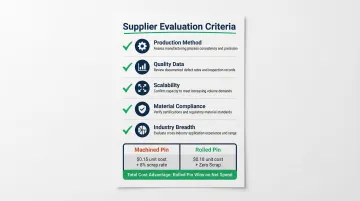
Not every manufacturer on a "top 10" list belongs on your shortlist. Each manufacturer below was evaluated against five criteria that separate reliable suppliers from risky ones:
- Production method and process consistency — die rolling, machining, and stamping each carry different defect rates, scrap levels, and tolerance capabilities
- Quality data over marketing claims — specific defect rates and process control metrics, not "high quality" language
- Scalability — ability to handle prototype runs and sudden volume surges without sacrificing lead times
- Material compliance documentation — verified REACH, RoHS, and lead-free status before you need it, not after
- Industry breadth — manufacturers serving automotive, medical, and aerospace typically maintain tighter controls than those focused on a single market
Common buyer mistake: Prioritizing unit price over total cost. Scrap rates, reject rates, and rework costs often offset apparent savings. A machined pin at $0.15 each with 8% scrap costs more than a rolled pin at $0.18 each with zero scrap.
Match the manufacturing method to your actual volume and tolerance needs. For 10 million pins annually at ±0.001" tolerances, automatic die rolling delivers superior consistency. For 500 complex-geometry pins on a prototype run, precision machining is more practical.
US-based manufacturers also offer faster design iteration, easier compliance verification, and more responsive support — all of which matter when timelines are tight or designs change mid-run.
Conclusion
Choosing the right brass contact pin manufacturer in the US requires looking beyond catalog specs. Production technology, defect rates, compliance credentials, and the ability to scale determine whether a manufacturer is a reliable long-term partner or just a one-time vendor.
Before committing to a production run:
- Request samples and evaluate actual parts, not just datasheets
- Ask for statistical quality data—specific defect rates, not generic quality claims
- Evaluate how quickly the manufacturer can respond to design revisions
- Verify compliance documentation directly, especially for REACH and RoHS
If your evaluation criteria lead you toward a cold-forming alternative to machined pins, Electropin manufactures custom brass contact pins using automatic die rolling — a scrap-free process with a verified defect rate of 1 in 600,000,000. The company has over 80 years of manufacturing experience and can often deliver a first batch in as little as two weeks. Reach out to discuss your application at +1 919-288-1203.
Frequently Asked Questions
What are brass contact pins used for?
Brass contact pins are precision electrical components that create reliable conductive connections in connectors, circuit boards, molded plastic housings, and industrial equipment. Common applications include automotive connectors and sensors, medical device interfaces, computer PCB connections, and farm equipment electrical systems.
Why choose a US-based brass contact pin manufacturer over an overseas supplier?
US-based manufacturers offer shorter lead times (often 2-12 weeks vs. 12-20 weeks overseas), easier REACH/RoHS compliance verification, direct supply chain visibility, and faster design iteration support. For regulated industries like medical and automotive, traceability and audit requirements are typically easier to maintain with domestic manufacturers.
What is the difference between rolled and machined brass contact pins?
Machined pins are cut from solid bar stock, producing scrap and tool wear that can affect consistency as cutting edges dull. Rolled pins are formed without cutting, producing zero scrap and maintaining dimensional consistency from the first to the millionth part.
How do I select the right brass contact pin manufacturer for my application?
Evaluate manufacturing technology (rolled vs. machined vs. stamped), ask for specific defect rates and statistical quality data, verify lead times and minimum order quantities, confirm certifications (ISO, IATF, AS9100D as applicable), and assess the manufacturer's willingness to support design iteration. Request sample parts and quality documentation before placing production orders.
Are brass contact pins RoHS and REACH compliant?
Compliance depends on the alloy and plating used. Lead-free brass alloys and specific plating choices (gold, nickel, tin) are available from most US manufacturers to meet RoHS and REACH requirements. Always verify compliance documentation directly from the manufacturer before ordering—don't assume compliance based on material type alone.
What industries use brass contact pins most commonly?
Primary sectors include automotive (connectors and sensors), medical devices (precision diagnostic equipment connectors), consumer electronics and computers (PCB and board-to-board connections), farm equipment (durable electrical interfaces in harsh environments), and industrial equipment.