Introduction
Circular connectors power everything from military UAVs to electric vehicle charging infrastructure — but connector performance ultimately comes down to the contact pins inside. These precision-machined or cold-formed components govern signal integrity, current capacity, mating cycle life, and system reliability across the most demanding environments.
Procurement teams and design engineers face a persistent challenge: sourcing contact pins that meet tight dimensional tolerances, material specifications, and volume requirements from US-based manufacturers.
Supply chain disruptions post-2020 have intensified the push for domestic sourcing. Defense spending mandates, NEVI infrastructure programs, and pressure for faster lead times have all pushed OEMs toward qualifying reliable US suppliers.
This article profiles the top 10 circular connector pins manufacturers operating in the United States, covering their manufacturing capabilities, industries served, and what distinguishes each supplier from the competition.
Key Takeaways
- Circular connector pins are precision contact elements that directly determine signal integrity, mating cycles, and system reliability
- US manufacturers range from global conglomerates with domestic facilities to specialized producers offering focused expertise
- Key selection factors: manufacturing method (cold-forming vs. machining), tolerance accuracy, MOQs, lead times, and RoHS/REACH compliance
- Electropin stands out with proprietary automatic die rolling technology delivering zero-scrap production and a 1-in-600-million defect rate
- Each supplier below is evaluated on production capabilities, certifications, industry focus, and suitability for high-volume custom orders
Overview of Circular Connector Pins in the US Manufacturing Landscape
Circular connector pins are the individual conductive contacts—typically male pins or female sockets—housed within a circular connector shell. Unlike the connector assembly itself, these pins govern critical performance parameters: current carrying capacity, insertion force, mating cycle durability, and corrosion resistance. A single underperforming contact can bring down the entire assembly.
The US circular connector market reached $1.63 billion in 2024, capturing 82% of the North American landscape. The global market for circular connector contacts is projected to hit $6.2 billion by 2025, growing at a 7.8% CAGR.
That growth is driven by demand across multiple sectors:
- Defense: MIL-DTL-compliant UAV contacts requiring vibration and corrosion resistance
- Automotive: High-current EV battery pins rated for sustained load cycles
- Medical devices: Biocompatible materials with strict sterilization tolerances
- Industrial automation: Vibration-resistant designs for continuous-duty environments
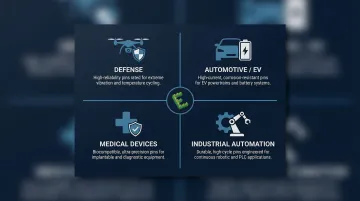
These demands are pushing procurement teams toward US-based pin manufacturers. Domestic sourcing offers faster lead times, tighter quality oversight, and the compliance traceability that global suppliers often can't match. For organizations working within CHIPS Act incentives, NEVI infrastructure requirements, or defense sourcing mandates, where a pin is made matters as much as how it performs.
Top 10 Circular Connector Pins Manufacturers in the US
Each manufacturer on this list was evaluated across these criteria:
- Manufacturing capability and precision tolerancing
- Material variety and plating options
- Industry certifications held
- Customer base and end markets served
- Production scalability and confirmed US presence
The list spans custom contact pin specialists to full-line connector manufacturers with dedicated pin production.
Electropin (Autoswage Products, Inc.)
Founded in 1943 and headquartered in North Carolina, Electropin is a three-generation family business that evolved from manufacturing fluorescent lightbulb pins to becoming a premier custom contact pins manufacturer serving automotive, medical, farm equipment, computer, and circuit board industries.
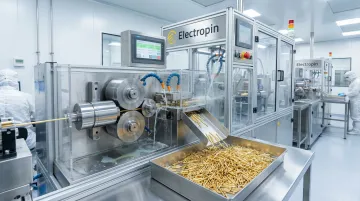
Electropin's proprietary automatic die rolling technology sets it apart. The cold-forming process requires no cutting or heating, eliminates scrap entirely, and keeps tooling sharp from the first pin to the millionth—resulting in a verified defect rate of just 1 in 600,000,000 and the ability to produce up to five custom pins per second with first-batch delivery in as little as two weeks.
| Manufacturing Technology | Automatic die rolling (cold-forming); no cutting, no scrap, tools don't dull |
|---|---|
| Key Differentiator | Lead-free pins without leaded brass; REACH/RoHS compliant; defect rate of 1 in 600,000,000 |
| Industries Served | Automotive, medical, farm equipment, computers, circuit boards, molded plastic parts |
Amphenol Corporation
Amphenol operates a 307,000-square-foot facility in Sidney, New York, housing CNC machining, screw machining, and plating operations for contact pins. A second 73,000-square-foot hub in Mesa, Arizona handles advanced contact automation.
As one of the largest connector manufacturers globally, Amphenol produces millions of contacts monthly—from industry-standard AS39029 contacts to proprietary High Speed and High Power contacts (sizes 0 to 23). US operations maintain AS9100:D and ISO 9001:2015 certifications, with contacts available in beryllium copper, phosphor bronze, and other high-performance alloys.
| Manufacturing Locations (US) | Sidney, NY (307,000 sq. ft.); Mesa, AZ (73,000 sq. ft.) |
|---|---|
| Key Certifications | AS9100:D, ISO 9001:2015 |
| Industries Served | Aerospace, defense, industrial, automotive, medical |
TE Connectivity
Spun off from Tyco International in 2007, TE Connectivity operates US manufacturing facilities in Middletown, Landisville, and Mount Joy, Pennsylvania. TE's portfolio includes highly regarded DEUTSCH solid contacts for copper cables, EN3155 certified and capable of withstanding jet engine applications up to 260°C.
TE's contact manufacturing sites hold AS9100D, ISO 9001:2015, and IATF 16949 certifications, making them a qualified domestic supplier for both aerospace and automotive precision contacts.
| Manufacturing Locations (US) | Middletown, PA; Landisville, PA; Mount Joy, PA |
|---|---|
| Key Product Lines | DEUTSCH Solid Contacts, M39029 series |
| Industries Served | Automotive, aerospace, industrial, medical, energy |
Molex LLC
Headquartered in Lisle, Illinois, Molex was acquired by Koch Industries for $7.2 billion in 2013. Molex produces high-performance contact solutions including FCT Precision Machined Contacts made from copper alloy with gold-over-nickel plating. These solid metal contacts offer greater power density and lower contact resistance (≤10 milliohms for standard density) than stamped alternatives.
Molex also manufactures MultiCat High-Power precision-machined contacts rated for up to 40A per contact with 500-mating-cycle durability, serving data communications, automotive, medical, and industrial sectors.
| Headquarters | Lisle, Illinois |
|---|---|
| Key Capabilities | FCT Precision Machined Contacts, MultiCat High-Power contacts (up to 40A) |
| Industries Served | Data communications, automotive, medical, industrial |
ITT Cannon
Based in Santa Ana, California, ITT Cannon has supplied defense and aerospace markets for decades and is best known for its CA Threaded / MIL-DTL-5015 series connectors, which utilize precision-machined contacts designed for strength and durability. These contacts are typically plated with silver to maintain signal integrity in heavy-duty, unsealed applications, though gold plating is available for enhanced corrosion resistance.
ITT Cannon's US operations maintain AS9100 and ISO 9001:2015 certifications for military and aerospace applications.
| Headquarters | Santa Ana, California |
|---|---|
| Key Certifications | AS9100, ISO 9001:2015 |
| Industries Served | Aerospace, defense, industrial, medical |
Positronic Industries
Headquartered in Springfield, Missouri, Positronic Industries operates over 200 automatic lathes producing thousands of varieties of precision-machined electrical contacts. All contacts are machined from solid copper alloy and gold-plated, with options spanning gold flash, 30 microinches, and 50 microinches.
Positronic's major innovation is the PosiBand contact system, which replaces legacy split-tine designs. PosiBand contacts are more robust, feature greater surface area at the mating interface, and require lower average insertion forces. The PosiBand design is QPL-approved to SAE AS39029.
| Headquarters | Springfield, Missouri |
|---|---|
| Manufacturing Specialty | Swiss-machined precision contacts; PosiBand technology (QPL-approved AS39029) |
| Industries Served | Defense, space, medical, industrial |
Glenair, Inc.
Headquartered in Glendale, California, Glenair operates a vertically integrated manufacturing model, producing contacts and connectors in-house. Glenair is a QPL-approved manufacturer for MIL-DTL-38999 contacts (CAGE code 06324). Beyond standard AS39029 pins, Glenair manufactures proprietary LouverBand socket contacts, which utilize a stamped and formed 6-mil beryllium copper spring that provides multiple points of electrical contact, outperforming conventional four-finger split-tine contacts in high-vibration environments.
Glenair's facilities are certified to AS9100D and ISO 9001:2015.
| Headquarters | Glendale, California |
|---|---|
| Key Capabilities | LouverBand socket contacts (6-mil BeCu spring); MIL-DTL-38999 QPL-approved |
| Industries Served | Aerospace, defense, space, industrial |
Winchester Interconnect
Headquartered in Milford, Connecticut, Winchester Interconnect maintains a global footprint of engineering facilities, including a specialized Micro division in Orange, California. Winchester specializes in rapid prototyping and custom precision-engineered interconnects for aerospace, defense, medical, and space applications.
The Orange, California facility is certified to AS9100D and ISO 9001:2015 for the design, development, and manufacturing of electrical connectors and cable assemblies, with a focus on custom precision machining for low-volume, high-complexity contacts.
| Key US Locations | Orange, CA (Micro division); Milford, CT (HQ) |
|---|---|
| Manufacturing Process | Precision Swiss machining; custom rapid prototyping |
| Industries Served | Defense, aerospace, medical, space |
Cinch Connectivity Solutions
Cinch Connectivity Solutions, headquartered in Lombard, Illinois, specializes in high-performance circular connectivity. Cinch manufactures the Omega series (qualified to MIL-C-26500) and the PWF series (qualified to MIL-C-26482 Series I). The contacts for these series are machined from solid copper alloy and gold-plated in accordance with MIL-G-45204 Type II, ensuring reliability across a -55°C to +125°C temperature range.
Cinch's Lombard facility is certified to AS9100D and ISO 9001:2015.
| Headquarters | Lombard, Illinois |
|---|---|
| Key Product Lines | Omega series (MIL-C-26500), PWF series (MIL-C-26482 Series I) |
| Industries Served | Military, aerospace, industrial, commercial electronics |
Souriau USA (Eaton)
Souriau-Sunbank, acquired by Eaton for $920 million in 2019, maintains a dedicated US manufacturing and engineering presence in York, Pennsylvania, focusing on aerospace and industrial connectors. Souriau's 8D series (MIL-DTL-38999 Series III) utilizes precision crimp contacts, including high-speed Quadrax and concentric twinax pins, featuring 1.27µm gold plating for QPL-qualified military applications.
Souriau's US operations hold AS9100 and ISO 9001 certifications.
| US Operations | York, Pennsylvania (manufacturing and engineering) |
|---|---|
| Key Certifications | AS9100, ISO 9001 |
| Industries Served | Aerospace, defense, rail, industrial automation |
How We Chose the Best Circular Connector Pin Manufacturers
Manufacturers were selected based on four core criteria:
- Confirmed US-based manufacturing operations — not just sales offices or distribution centers
- Demonstrated specialization in circular connector contact pins — not merely full connector assemblies
- Ability to support custom or OEM pin requirements — beyond catalog-only offerings
- Evidence of serving demanding sectors — automotive, defense, medical, or industrial automation
One common mistake: conflating connector assemblers with pin manufacturers. Smaller specialists often deliver better cost, faster turnaround, or tighter customization than larger generalists — but they're easy to overlook.
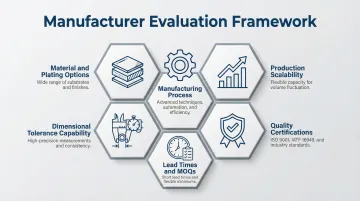
Beyond those four criteria, each manufacturer was assessed across six performance factors:
- Manufacturing process (cold-forming for strength and zero scrap; precision machining for tight-tolerance complex geometries)
- Material and plating options — beryllium copper, phosphor bronze, brass; gold-over-nickel to prevent diffusion corrosion
- Production scalability from low-volume custom runs to high-volume OEM supply
- Dimensional tolerance capability: ±0.0025mm (machined) vs. ±0.025mm (cold-headed)
- Quality certifications: AS9100D, ISO 9001:2015, IATF 16949, MIL-spec QPL listings
- Lead times and MOQs relative to realistic production volumes
Price is a poor selection criterion on its own. A lower per-unit cost means little if defect rates are high, lead times slip, or minimum orders exceed your needs. Evaluate total cost — scrap rates, rework, and supplier responsiveness included.
Conclusion
The US circular connector pins market includes both global giants with domestic manufacturing and specialized producers like Electropin that offer focused expertise, faster turnaround, and manufacturing technologies designed specifically for precision pin production at scale.
Align supplier selection with your specific application requirements—whether mil-spec compliance, medical-grade material certifications, high-volume low-cost production, or consistent quality across multi-million-part runs. Material choice, plating stack integrity, and manufacturing method directly impact field reliability and total cost of ownership.
For engineering teams sourcing custom circular connector pins, Electropin's automatic die rolling technology delivers a measurable edge. The process produces up to five pins per second with a documented defect rate of 1 in 600,000,000—and first batches can ship in as little as two weeks. Reach out at +1 919-288-1203 to discuss your pin specifications.
Frequently Asked Questions
What are circular connector pins made of?
Circular connector pins are typically manufactured from copper alloys including brass, phosphor bronze, and beryllium copper. Common plating options include gold, tin, silver, and nickel. Material choice affects conductivity, corrosion resistance, spring properties, and cost—beryllium copper offers the best mechanical and electrical properties for high-cycle applications.
What is the difference between cold-formed and machined connector pins?
Cold-forming shapes pins without cutting or heating, preserving grain structure and eliminating scrap—tools don't dull, so consistency holds from part one to part one million. Machining cuts from bar stock, generating 50–70% scrap with tool wear that can affect dimensional consistency over long runs. Cold-formed pins deliver superior mechanical strength; machined pins handle more complex geometries.
How do I choose the right circular connector pin manufacturer in the US?
Evaluate manufacturing process, precision capability, material and plating options, certifications relevant to your industry (AS9100D for aerospace, IATF 16949 for automotive), lead times, minimum order quantities, and custom design support. Match the supplier's strengths to your application's requirements—not just brand recognition.
What industries use circular connector pins most heavily?
Primary end-use industries include aerospace and defense (mil-spec requirements for UAVs and soldier systems), automotive (high-volume, vibration-resistant contacts for EVs), medical devices (biocompatible materials and sterilization compatibility), industrial automation (sensor and actuator connectivity), and agricultural/farm equipment (harsh-environment durability).
Can circular connector pins be custom manufactured to specific dimensions?
Yes. Most specialized US manufacturers produce custom pins to order. Buyers typically define diameter, length, head geometry, retention features, material (brass, phosphor bronze, beryllium copper), plating (gold-over-nickel, tin, silver), and tolerance requirements. Cold-forming suits high-volume precision work; machining handles more complex geometries.
What does REACH and RoHS compliance mean for connector pins?
REACH and RoHS are EU regulations restricting hazardous substances in electrical components. RoHS limits lead to 0.1% by weight, though Exemption 6(c) allows up to 4% in copper alloys. Lead-free manufacturing—like Electropin's approach—eliminates compliance concerns entirely for export and OEM customers.